Monday, November 24, 2014

What to Know Before You Tile

Tile is a beautiful addition to any home! It brings in class and visual appeal. Tile has a timeless look to it, and is a sturdy choice that provides longevity to your floor. Bringing tile in your home is an investment that you will be able to enjoy! When considering this decision, there’s a few elements to assess.
Ceramic tiles with tile cutterThe first question is the why. Why are you choosing to tile? There are many benefits that tile brings, and one must consider the commitment involved in the decision to tile. Being extraordinarily durable also makes it permanent. A job well done will add value to your home, but a job poorly done is expensive to replace, and very difficult, sometimes impossible, to correct. If prepared to make the investment for a good tile job, though, it will bring many benefits to your home. Tile is fire resistant, slip resistant, and easy to clean and maintain. This makes it both a beautiful and convenient choice.
Before you decide to tile, you should first assess the area you want tiled. What subfloor do you have? Are there any cracks or dents? What condition is the floor in? Addressing these issues early will help prevent the tile from cracking, will make the process much quicker, and may greatly influence your decision. To tile you need a sturdy, level subfloor. Though not always necessary, it is often advised to install a concrete backer board depending on the kind of subfloor that you have. When properly installed, the board will provide a leveled, unblemished base allowing for a quick transition to tiling.
Once confident that you have a level and sturdy subfloor, it’s left to you to choose a design. This is the fun part as you get to use your creative eye and pick a design that suits your home! Depending on the size of the space, you may decide to choose more than one tile for added complexity and design. There are many popular layouts used, from basic, to checkered, to offsets. More complex designs will require a more experienced hand.
Many people have done their own tiling jobs, and you may be one of them. The tools are available for purchase and generally inexpensive enough for the average homeowner to obtain. However, because tiling is such an important commitment and large investment, we highly recommend you hire a professional if you have never tiled on your own, or are uncomfortable with any part of the process. This is especially crucial if you have a complex design, an awkward room layout, many corners, or anything round. When you are ready to take this step, we will gladly recommend the perfect contractor for your job!
Before tiling, the room will need to be completely cleared, the old flooring removed, and the subfloor completely leveled and cleaned. It is important that there is no debris leftover before the tiling starts, as lingering debris will cause the adhesive not to bond with the floor, and damage the integrity of the floor. Gaps also need to be filled and rises corrected. Any leftover gaps or rises will become weak points down the line and take away from the long term durability of your floor.
A tile job well done is a beautiful addition that will add beauty and value to your home. It’s an investment that shouldn’t be made lightly, but always made in confidence. When you are ready, should any part of the process seem uncomfortable, hire a professional to make sure the job gets done right! At Responsible Contractors, we aim to bring you the best in each industry, and will gladly recommend a floorer you can trust with confidence. Too find one, visit responsiblecontractors.com! Happy tiling!

Friday, November 14, 2014

Guardians of the Home: Front Doors

The entrance to your home is more than a door. It brings aesthetic appeal, creates first impressions, guards against weather, and for some homes is a first line of defense against intruders. But with the weather changing and the season for working outdoors coming to an end, is your door ready to face the challenges of the cold seasons? Here’s some things to look for and tips for improvement.
Weather
Wooden Front DoorEspecially important if you’ve noticed a cool draft in the entry way or hear wind leaking through the door, there’s a few things you can do to weather your door and increase your energy efficiency. The first thing to check, more common with older doors, is the hinges. This can take you as little as five minutes. Open the door halfway, and lift up at the door handle while watching the hinges. Your door should stay firmly in place. If it moves up and down you may have a loose hinge. Tightening these alone will solve some draft problems.
If you still feel a cool draft, it’s time to check your weather stripping. Over time it will become distorted and cracked. You may just need to replace it. To check, run your fingers along each edge of the door and feel for a cold draft. If you feel one, it’s a sign that your weather stripping has passed it’s prime. Replacing weather stripping on newer doors is fairly simple, as most were built to hold one. An older door without weatherstripping will need it to be added. To replace weather stripping on a newer door, you’ll need to find a replacement that fits. You can do this by calling your door’s manufacturer if you know it, or taking your old weather stripping into a well-stocked hardware store and looking for its match. If you cannot find a match, call a trusted door or window repair service. We’d be happy to recommend some! Replacing weather stripping on an older door will require more installation. Most hardware stores will sell weather stripping kits. These kits include two side strips, a top strip, and fasteners. Installation will require basic tools. You’ll need measuring tape, a fine-tooth saw, a coping saw, a hammer, a drill, nails and screws. Your kit should come with basic installation instructions. If at any point you feel uncomfortable or unsafe, do not hesitate to call a professional to complete the job for you!
Security
If you’re concerned about your door’s security, here is an easy installation that will help you reinforce it. While you do have the option of purchasing a pick-proof dead bolt, that may not be the most efficient option. We recommend reinforcing hardware, which will make the door difficult to kick or push open. You can purchase these at local hardware stores, and installation takes only about an hour. For this project, you’ll need a tape measure, drill, and drill bit set. These should come with their own installation instructions.
When it comes to security though, do not panic. If you feel you are at a high risk, or have a tendency to worry, consider installing a reputable alarm system. Some additional simple steps any homeowner can take to decrease risk are: Make sure your doors have deadbolts, keep your newspaper and mail picked up, leave light and noise on inside the house, have a car in the driveway, have an open porch so it’s difficult for a person to conceal himself, and have a generic (not brand-specific) sticker near the door indicating your house is protected by an alarm system.
Reinforcing your home’s front line of defense will make the cold seasons a little warmer, and more comfortable. If you find you’re having problems with your door, contact one of our trusted professionals to help you evaluate and fix it. At Responsible Contractors, our goal is to bring you the best in construction, so that your home will always be its best.

Spotlight on: Custom Homes: Assisted Custom Construction, Inc.

Have you ever found yourself daydreaming about the perfect remodel? Maybe browsing through listings of homes for sale just to spark your imagination? We all dream of the perfect home. It’s a dream that may be in more reach than you think, but one that we put off too often. When you’re ready to take a step toward building your dream home, ACC Custom Homes is here!
One of the advantages of having a custom built home is the ability to choose your level of participation. From design to materials, you are given choices every step of the way so that your home will be truly unique. You’re also given the opportunity to be involved in the construction as well. Involvement is up to you!
custom_home_interior_9_700Building a home, however, is no small jump! There is a lot that goes into the process and for many homeowners it can be overwhelming. That’s why ACC Custom Homes handles every step of the process, including financial qualifying assistance, land acquisition, custom design, complete lending program, bid processing, construction permits, and state and local inspections. In their words, ACC Custom Homes will “prepare your bid package and build your dream house from the first nail driven to the last piece of grass in the front yard.” They rise above and beyond the general expectations of a construction consulting service, all to your benefit.
But isn’t a custom built home more expensive? The answer: It doesn’t have to be! In fact, with ACC Custom Homes, you may find substantial savings in building a home. One of ACC Custom Home’s convictions? Reducing builder margins. With them, the home of your dreams may not be as out of reach as you think! As one couple has reflected: “The question is not 'Would you build again?' it is 'When will you build again?' We will build again with Assisted Custom Construction, after we spend some time enjoying the home we now live in. We love the house!”
Here at Responsible Contractors, our goal is to bring you the best in construction. We are proud to recommend Custom Homes: Assisted Custom Construction, Inc. as the best among consulting services! To see more recommended contractors, visit www.responsiblecontractors.com.

Wednesday, November 12, 2014

November Newsletter 2014

The November Newsletter 2014 is now available for viewing!

Respiratory Protection: Get Informed!

Proper protection equipment is on the front lines of good construction practice. Getting a job done right, whatever the job, means completing it safely. When we look at safety, there are many avenues that come into play. Today let’s focus on respiratory protection. Our lungs are responsible for filtering the air that we breath in, and distributing oxygen throughout our body. But we need to help them too! Working in a dirty environment can expose our lungs to dirt, dust, bacteria, even harmful chemicals or mold. It’s important to know what environment you’ll be in, and how to properly prepare yourself with protection equipment.
Are Dusk Masks Enough?
masque blancThe answer is both a yes and a no: depending on the mask you have and the environment you’ll be working in. Dust masks come in many varieties, and choosing the wrong one can be a costly mistake. So how do you know which one to use and when? A rule of thumb to start with is to always purchase a mask with an N95 rating. This rating tells you that the filter will remove 95% of non oil-based particles from the air. For most home projects this will suit well, as it will keep dust out and prevent you from breathing in gusts of dirt. It will also protect against most allergens and a significant amount of airborne diseases. When working in your garage or shop, as long as you are not around dangerous chemicals, this mask will likely suffice. Are there cheaper alternatives? In direct comparison, no. However, a cheap, uncertified mask will protect against bugs and large debris such as wood shavings. It will not reduce filter out small particles though. Because of this, if you have any doubts, opt for a mask with a certification. The minimum of N95 is a great start. If you are working in an environment where you will face potential hazards or oil-based particles, consider a higher rating. R100 will filter out 100% of both oil-based and non oil-based particles up to eight hours P100 will filter the same beyond eight hours. If unsure, ask these questions: Will I be working around toxic particles? Am I going to be in an unfamiliar environment, where I may not know what is in the air? These will help you on your journey of choosing a mask.
So You’ve Chosen a Mask: Now What?
Once you know which rating of mask you need, make sure you purchase one that fits. It’s important to have one that fits comfortably on your face. Any gaps will allow air to seep through and render the mask obsolete. You should also be able to breath easily through it. If a mask deprives you of oxygen or becomes clogged and hard to breath through, it poses a risk to your health. Choose a mask that is comfortable, fits snuggly, and allows you to breath easily. And remember to always follow instructions!
What to Watch For:
While working, there are signs to pay attention to, to ensure that your mask is still functioning as it’s suppose to. Notice scents. Is there a change in smells around you? If so, it may be a sign that particles are leaking through. Any discomfort or irritation in your throat, nose, or lungs should create an immediate red flag. Notice also the humidity. Respirators need to remain dry to function properly. If your masks becomes wet, it’s time to replace.
Whether you’re working with drywall at home, painting, doing woodwork in your shop, or working in your garage, consider the health of your lungs and implement good safety techniques. A respirator or dust mask can be a small investment that your lungs will thank you for later! At responsible contractors we aim to bring you the best in construction. If you have a project that is over your head or safety concerns, consider hiring one of our trusted professional to get the job done for you! See more here: http://responsiblecontractors.com/

Thursday, October 30, 2014

10 Commonly Overlooked Cleaning Spots

As you’re spending more time indoors, keeping your house clean might start to become more of a priority. You know the feeling: You walk into your kitchen to make dinner, light a candle, turn on some soft evening music, and muse over the joys of life. Don’t you? For busy moms and families, deep  cleaning doesn’t always get done as often as they’d like.
Because of this, many spots in the house are often overlooked. When it’s time to treat
ourself to an evening in, let’s help you make sure your home is spotless. Here are ten commonly missed areas:
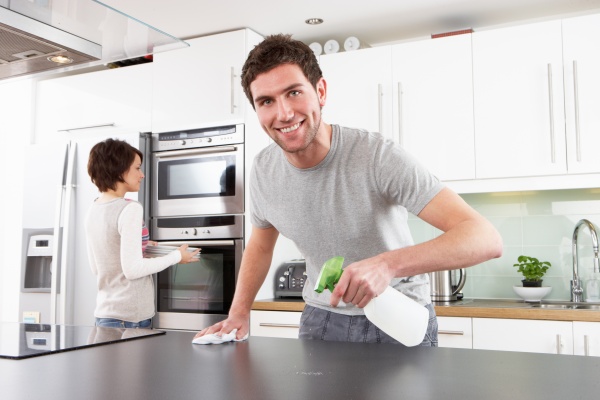
Young Couple Cleaning Cleaning Modern Kitchen
The Vacuum
The vacuum is often overlooked because it is a cleaning tool. But with all the dust it sucks up, it’s easy for germs to collect and find a home here. Once in a while, give your vacuum a good disinfecting!
The Trash Can
No one wants to pay too much attention to the trash cans. Garbage is thrown away and forgotten about. But all that garbage attracts a host of bacteria, germs, and more. Especially for garbages in the kitchen where you eat and drink, when you take out the trash, remember to wipe down and disinfect the garbage can, too! It will also help eliminate some of the nasty odors that linger.
The Computer & Phones
Computers and phones come in contact with our skin on a daily basis. And yet we seldom think of keeping them clean. Whether cell phone or landline, desktop or laptop, you can keep these clean without wetting them down or damaging them. Use a disinfectant wipe that is moist but not wet, and lightly wipe them down, concentrating on the keys, and any area that touches your face. This will help prevent those nasty germs that collect from spreading between persons.
The Refrigerator
The refrigerator holds your food, and because of this deserves a lot of attention! We tend to perceive it as clean because the cold inside helps prevent the growth of germs and bacteria. However it still needs to be cleaned, both inside and out. Concentrate on the handles where you open and close, and look for discoloration both on the exterior and interior. Make sure you throw out old or moldy food, and if you find any, give the inside a good disinfecting.
Doorknobs and Handles
The doorknobs and various handles throughout your home, from drawers to cabinets, are touched regularly and by any number of people. Don’t forget to keep them clean! This is good for your health, and the overall sanitation of your home.
Air Vents
Air vents are general unseen. And as the saying goes: “Out of sight, out of mind.” Remember to clean them once in a while. Any germs that linger can be carried throughout your home as air travels through them.
Window Treatments
Whether you have curtains or blinds, dust is sure to settle in. If you have blinds, wipe them down regularly! Curtains can be washed once in a while as well. These are both often forgotten because we see them as stagnate decor, and many people don’t handle them regularly.
Toothbrush Holders & Soap Dispensers
Soap helps keep your hands clean, but what about keeping the soap dispenser clean? Don’t be fooled: Bacteria can grow in and around the soap dispenser. And the toothbrush holder by your sink? Keeping this clean will help prevent you from allowing excess germs in your mouth. Don’t allow them to buildup near objects you use for personal hygiene!
Pet Supplies
Your pets have toys, beds, dishes, and more! Remember to keep them clean. Your animals may share your bed, your couch, cuddle up to you, and more! We love them. Make sure that their supplies are clean so that they don’t carry all those germs with them.
Dish Towels & Sponges
Like vacuums, we use our dish supplies to clean, and forget about keeping them clean! Towels should be washed regularly like laundry, sponges replaced regularly, and scrubbers run through the dishwasher weekly. Doing this will keep your dishes clean when you wash them, and prevent the excess growth of bacteria in your sink.
A clean home is not only good for your health and hygiene, it helps keep your house looking better, smelling better, and overall more welcoming. When you are ready for a night in, afford yourself some added peace of mind by knowing that you’ve conquered those commonly-missed places, and your home is sanitary and clean. Remember, you and your home are worth it! To see trusted contractors who can help with your home’s upkeep, visit http://responsiblecontractors.com/!

Friday, October 24, 2014

Keeping Warm with your Fireplace

The seasons are changing, and here in the northwest you may be finding yourself turning on the heat, bundling up with more blankets, slipping on the thick socks, and making hot tea. Fall has come, and many are stocking up their fireplaces to prepare for the cold. For many this is a loved season. Cozying up by the fire brings joy! But before you cozy up too close, let’s cover some fireplace basics. While there are many benefits, we also need to look at safety and maintenance.
FireplaceSafe fireplace use starts with attention. Fireplaces will heat your home for a time, but should not be used to replace a furnace. A general rule is not to let it burn for longer than five hours at a time. Before lighting your fire, make sure the area around it is clean and safe. Check for anything flammable in the near vicinity, including rugs, curtains, stockings during Christmas, or anything that may have been left nearby by children or animals. If you haven’t lit a fire in a while, check to make sure the airflow through the chimney is safe and unblocked. You can do this by lighting a match or candle and watching the smoke rise up and out. Also, inspect your chimney. It should be checked at least once a year, or twice if you use your fireplace daily throughout fall and winter. There should be no debris such as animal nests or leaves on the cap, and no tree limbs near the chimney. Make sure there is no crumbling within the chimney, as mortar can fall into your fireplace. Here are some additional tips for safe use: As a general rule, your chimney will suck up air moving through the house. Because of this, we recommend keeping a window open or cracked to prevent smoke from building up in the room, as the cold air will go out the chimney. When lighting a fire, make wise decisions! Don’t leave the fire unattended, especially with children or pets in the house. Don’t handle logs or kindling with your hands – use fireplace tools. Also, allow sufficient time for coals to cool, up to three days, before cleaning ashes. And never use a vacuum to clean out your fireplace, as you risk sucking up live coals.
Maintenance of your fireplace is routine and can be time-efficient. Once a year, have the chimney and flue damper inspected. You can look from inside with a flashlight at the flue damper yourself. It should open, close, and seal effectively. If it doesn’t, it will allow heat to escape from the home when the fire is not being used. When you go more than a couple days without burning a fire, keep the ashes cleaned out. Clean the firebox once a week during the season you use it. A thin layer of ash is desirable, but excess buildup will clog your fireplace and escape into the air. Also keep the fireplace hearth around it clean. Lastly, use a brick cleaner on the bricks. Because bricks are porous, make sure you’re cleaning with a method designed for bricks.
Finally, to get the most heat and efficiency from your fireplace, consider these couple ideas. First, make use of your fireplace doors! They exist to reduce air that would be siphoned out the chimney. If you’re leaving a window open and desire the heat to go up, leave the fireplace doors open. Otherwise, cracking the doors slightly will prevent the air flow from funneling heavily out the chimney and allow heat to radiate into the house. Make sure you’re using a safe fireplace door, however. Doors made from tempered glass risk breaking if closed while the fire is burning. Consider ceramic doors. A cheap door will not do its job properly. Even with a good door, do not rely on them exclusively to properly heat your home. The most effective option for increasing the heat your fireplace will produce is to install a U.S. Environmental Protection Agency approved insert. Costing upwards of $3000, in the long-term, it can be a worthwhile investment in your home. Lastly, for times when your fireplace is not in use, you can purchase an inflatable plug to stop existing warm air from escaping up the chimney.
Altogether, a fireplace is an aesthetically pleasing way to help heat your home during the colder seasons. You should be confident and comfortable when making use of it, and can be if you take proper precautions! To see some of our trusted contractors or for inspection recommendations, visit responsiblecontractors.com. Happy heating!